Plagiarism: Everything you need to know
Key takeaways
– Plagiarism means presenting someone else’s work as your own without acknowledging the source.
– Intent is not part of the definition. A missing quotation mark is enough to constitute plagiarism.
– Plagiarism is not a named criminal offence in the United States, the United Kingdom or France.
– Copyright infringement is a separate matter, and it is.
– Copyright protects expression, not ideas. This is why taking an idea without attribution is academic misconduct everywhere, yet copyright infringement almost nowhere.
Plagiarism is one of the most widely discussed concepts in academic life and one of the least precisely defined. Definitions differ between institutions, disciplines and countries. This article sets out what plagiarism actually covers, how the law treats it in different jurisdictions, and why the similarity percentage everyone asks about carries far less meaning than it appears to.
1. What is plagiarism?
Plagiarism is the act of using another person’s work, words, ideas or data without acknowledging the source. Two elements are enough to establish it: a borrowing, and the absence of attribution.
Note what is missing from that definition: intent. You can plagiarise without meaning to, through a forgotten quotation mark or a paraphrase that stays too close to the original. This is why most academic integrity policies distinguish between deliberate and inadvertent plagiarism when deciding on a response, while treating both as plagiarism.
Plagiarism, plagiarising, plagiarist
In contemporary academic use:
- To plagiarise is the act of borrowing without attribution.
- Plagiarism refers to both the act and the resulting passage.
- Self-plagiarism describes reusing your own previously submitted work, which most institutions treat as a distinct form of misconduct.
Important note:
The word traces back to the Latin plagiarius, which originally referred to a kidnapper. The Roman poet Martial applied it in the first century to a writer who had passed off his verses as his own. The metaphor of theft has been embedded in the term from the beginning.
Why the academic definition is broader than the legal one
This distinction matters more than any other in this article, and most resources skip it entirely.
Copyright law protects the form in which an idea is expressed. It does not protect the idea itself. Reusing a researcher’s argument, entirely rewritten in your own words and without attribution, will rarely constitute copyright infringement.
It is unambiguous plagiarism in academic terms. An assignment is designed to measure what you can do. Presenting borrowed reasoning as your own defeats that purpose, whatever the copyright position may be.
2. Is plagiarism illegal?
The short answer, in almost every jurisdiction: plagiarism itself is not a criminal offence. What can be unlawful is the copyright infringement that sometimes accompanies it. Two separate frameworks are at work, and conflating them is the most common error in this area.
United States
The Copyright Act of 1976 governs the matter. Section 102(b) of Title 17 of the U.S. Code states that copyright protection does not, in any case, extend to any idea, procedure, process, system, method of operation, concept, principle or discovery, regardless of the form in which it is described or explained.
This provision codifies what lawyers call the idea/expression dichotomy. It is the reason a recipe’s list of steps can be freely reproduced while the prose surrounding it cannot, and the reason borrowing an argument is a matter for your institution rather than a court.
The fair use doctrine, set out in Section 107, permits limited use of protected material for purposes including criticism, comment, teaching and research. Fair use is a defence to infringement, not a substitute for citation. Quoting within fair use and failing to attribute remains plagiarism.
United Kingdom
The Copyright, Designs and Patents Act 1988 applies. Infringement is primarily a civil matter, giving the rights holder access to remedies through the courts. Criminal liability arises in specific circumstances, essentially involving commercial-scale dealing in infringing copies, which places ordinary academic plagiarism outside its scope.
British universities address plagiarism through academic misconduct procedures rather than the legal system, with penalties defined in each institution’s regulations.
The common thread
Three different legal traditions, one consistent outcome. The institution, not the court, is where plagiarism is normally resolved. Which is precisely why institutional policies deserve more attention than they usually receive.
3. The 8 types of plagiarism
Verbatim copying
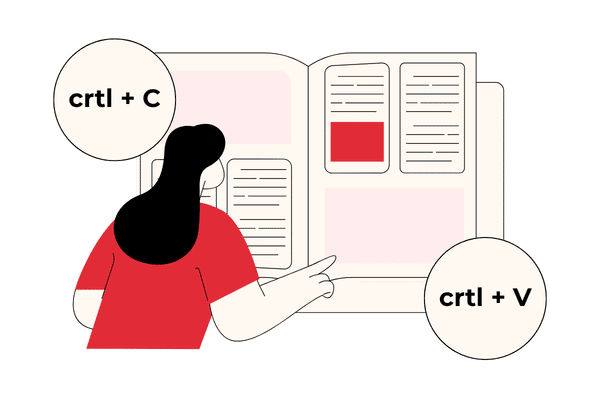
Reproducing a passage word for word without quotation marks or reference. The best known form, and the easiest to identify.
Unattributed paraphrasing
Restating an author’s idea in your own words without citing the source. This is the most frequent form by a wide margin, because many writers assume that changing the wording removes the obligation. It does not. If the idea is not yours, the source is cited, however original your phrasing.
→ Paraphrasing and plagiarism: where is the line?
Translation plagiarism
Translating a foreign-language source and integrating it without naming the original author. Long invisible to monolingual tools, which compare strings within a single language. Cross-language detection has changed that, but the citation rule was never in doubt: a dissertation built on English-language sources cites its English-language sources.
Self-plagiarism
Reusing your own earlier work without disclosing it. Counter-intuitive, and still penalised: the same piece of work cannot be credited twice. The legal position is worth noting, since you cannot infringe your own copyright. However, if you have assigned rights to a publisher, reusing your own text may place you in breach of that agreement.
Uncredited images and graphics
A table, a photograph, an infographic are works in their own right. They are cited like text, with author, title, year and source. A chart taken from a report remains the work of whoever produced the data and its presentation, even if you redraw it.
→ Using royalty-free images and graphics
Secondary citation presented as primary
Citing an author you have not read, using a reference found in someone else’s work. Two risks follow: you propagate any transcription errors, and you imply a reading you have not done. Standard practice is to write “cited in”, or to go back to the original source.
→ Primary and secondary sources
Anonymous sources left uncredited
An unsigned web page, a collaborative encyclopedia entry or an unattributed institutional document is still a source. The absence of a named author does not remove the citation requirement: reference the organisation, the page title and your date of access.
→ How to cite anonymous authors
Common knowledge misjudged
Information that qualifies as common knowledge does not require a reference. The difficulty lies in identifying the boundary. The working rule applied in most university guides: if the information appears without attribution in five independent general sources in your field, it is common knowledge. When in doubt, cite. An unnecessary reference has never cost anyone marks.
→ What counts as common knowledge?
Two further situations deserve a mention: presentation slides, where sources are routinely omitted although the citation rules apply unchanged, and citation standards not followed, where a correct intention produces an incorrect reference.
→ Citing sources in a slideshow · Citation standards: Harvard, APA, Chicago, ABNT · Building an effective bibliography
Plagiarism checker for students
Compilatio Studium highlights the passages that resemble other sources and gives you time to correct them, calmly, before you submit.
4. What is an acceptable similarity rate?
This is the most frequently asked question about plagiarism, and the answer disappoints almost everyone: no regulation, in any country, sets a threshold.
A similarity rate is not a plagiarism rate
Detection software measures similarity: the proportion of text that resembles other content. It does not measure plagiarism, which is a human judgement about the origin and attribution of those passages.
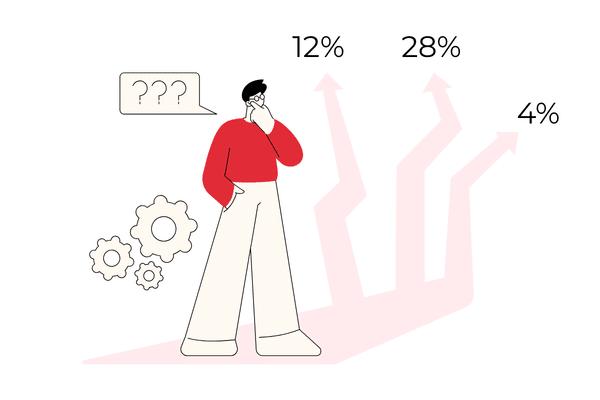
The gap between the two can be considerable, in both directions.
- A law dissertation showing 28 % similarity may be entirely sound: statutory provisions quoted, case law reproduced, a properly formatted bibliography, and the fixed phrasing every legal writer uses.
- A research article showing 4 % may be seriously compromised, if those four percent contain the central hypothesis, borrowed without reference.
The percentage tells you where to look. It does not tell you what to conclude.
What institutions actually do
In the absence of any external standard, each institution defines its own reference points in its academic integrity policy. Alert thresholds most commonly observed fall between 5 % and 25 %, with wide variation by discipline and by type of assignment.
The reliable move is to read your own institution’s policy before submitting. It is almost always published online, and it is the only document that governs your situation.
5. Consequences of plagiarism
For students
Institutional responses form a recognisable progression across jurisdictions: a formal warning, a mark of zero for the assignment, nullification of the wider examination session, suspension, and at the most serious level, permanent exclusion.
One consequence deserves particular attention, because it applies long after graduation. Universities can and do revoke degrees retroactively when plagiarism is established in a thesis or dissertation, sometimes decades later. Unlike a failed assignment, this outcome carries no time limit in most institutional regulations.
For researchers
In published research, the consequence is retraction: the formal withdrawal of an article by the journal. A retraction notice remains permanently attached to the record in bibliographic databases and citation indexes. It is visible to every future reader, reviewer, funder and hiring committee.
For professional writers
Copyright infringement claims become considerably more likely once work is published commercially. Beyond any legal exposure, the reputational effect within editorial and client relationships is usually the more immediate concern.
→ Similarity, AI and PMM detection for writing professionals
6. How plagiarism detection works
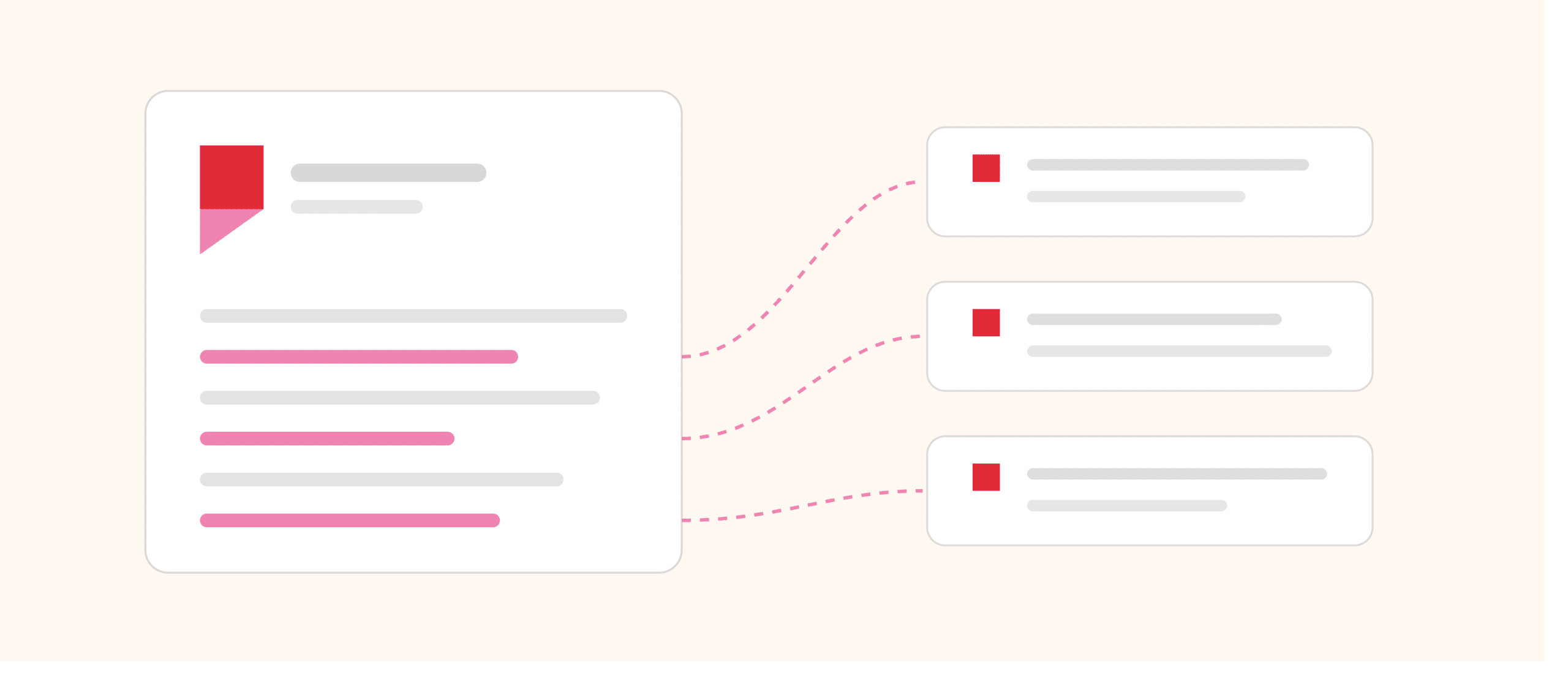
A detection engine breaks the document into sequences and compares them against a corpus: indexed web pages, scientific publications, and depending on the solution, work submitted by an institutional community. It returns a report identifying resembling passages alongside their probable sources.
Plagiarism checker for teachers
Compilatio Magister analyses your students’ work, displays each source next to the passage it relates to, and leaves you the reading, where it carries real value.
What it does well: cover, in minutes, a volume of sources no human reading could reach, and surface correspondences that are invisible to the eye.
What it does not do: decide. A flagged passage may be a perfectly referenced quotation. The analysis produces a map. The reader retains the judgement. This is why Compilatio reports display each source next to the passage it relates to, rather than returning a bare score.
Compilatio solutions also identify content likely to have been generated by artificial intelligence, along with deep rephrasing and translated passages, three developments that have reshaped academic writing since 2023.
→ How similarity detection works · AI content detection · How to choose the best plagiarism checker
FAQ
Is plagiarism illegal?
Plagiarism itself is not a criminal offence in the United States, the United Kingdom or France. Depending on the facts, it may constitute copyright infringement, and it will almost always fall under your institution’s academic misconduct procedures.
Can you plagiarise unintentionally?
Yes. Intent is not part of the definition. A missing quotation mark or a paraphrase too close to the original is sufficient.
Does rewording a sentence avoid plagiarism?
No. If the idea comes from someone else, the source is cited regardless of the wording you choose.
What similarity rate is acceptable?
No regulatory threshold exists. Institutions set their own reference points, most commonly between 5 % and 25 % depending on discipline and assignment type.
Can you plagiarise yourself?
Yes, this is self-plagiarism. Resubmitting previously assessed work without disclosure means claiming credit twice for the same production.
Does common knowledge need a citation?
No, provided it genuinely qualifies. A practical test: if the information appears without attribution in at least five independent general sources, it is common knowledge.
Do images found online need to be cited?
Yes. Photographs, diagrams and charts are works and are referenced with author, title, year and source.
Can a degree be revoked for plagiarism?
Yes. Institutions can withdraw a qualification retroactively when plagiarism is established in a thesis or dissertation, and most regulations set no time limit on this.
You now know what plagiarism covers and what is at stake. The more useful question comes next: how do you produce work whose authenticity is beyond question? Citation, paraphrasing and source management are all decided while you write.
How to avoid plagiarism
Check out our tips on best writing practices to avoid plagiarism.
Was this article helpful?

Jérémy STERN
As a recent graduate, I am convinced that a degree is only as valuable as what you have actually learned. I work every day to uphold this belief.