What does Compilatio use to compare your documents?
A diverse and constantly expanding database for comparison, containing billions of pieces of content.
Constantly evolving comparison databases
With Compilatio’s search engines, enjoy extensive coverage that includes the Internet, over a billion private and open-access scientific publications, a wide range of content from academic institutions around the world, and much more!
Compilatio is constantly expanding its comparison databases to offer:
+2000
institutions
+60
countries
+110%
new content indexed annually
+2M
users
+40
Supported Languages

The Web at the Heart of Your Comparisons
Compilatio compares your documents with billions of web pages available on the Internet and indexed in our internal database.
Why?
To deter the temptation to commit fraud by copying web content that is accessible with a single click.

Leading scientific content, both proprietary and open access
Compilatio compares your documents with over one billion scientific publications from a variety of sources, including:
- private scientific publications and articles,
- open-access scientific publications and articles,
- content from internationally renowned professional publishers,
- university and research center repositories,
- publications from the world’s most influential institutions,
- articles by students and researchers.
Why?
To promote the work of the scientific community by encouraging best practices in research and citation.
A comparison database enriched by the Compilatio user community
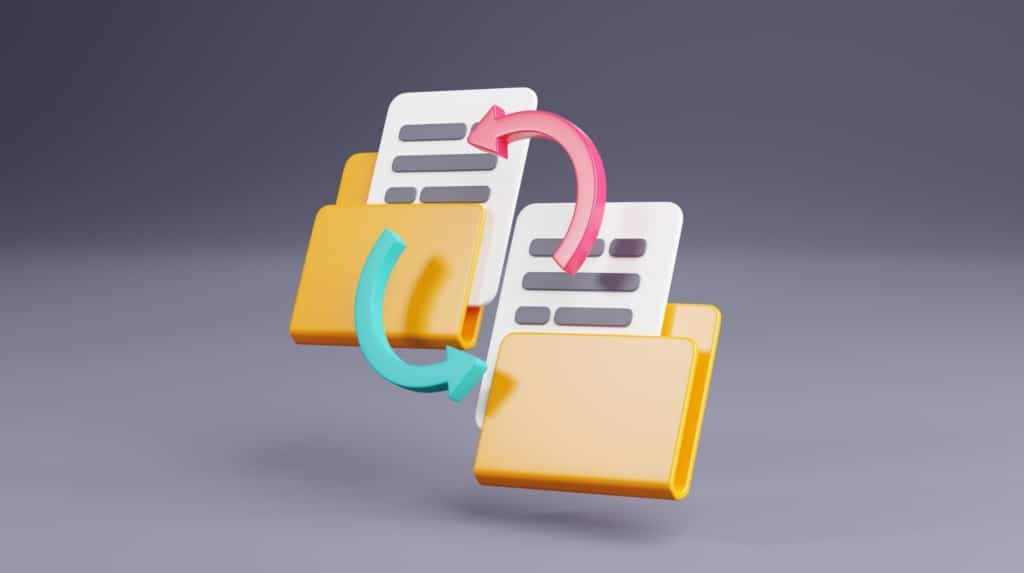
Compilatio confidentially compares your documents with those of users at your institution and at other institutions in the Compilatio network.
This comparison is available only to users of the Compilatio Magister solution for educators.
Why?
To discourage students from reusing, in whole or in part, a previous assignment or a peer’s work, and thereby strengthen efforts to prevent inter- and intra-institutional plagiarism.
Compilatio covers countless fields of study and disciplines
Arts and Humanities
Arts, cultural studies, folklore, interdisciplinary humanities, music, philosophy, religions, theater, poetry…
Science and Technology
Computer Science, Chemistry, Biology, Engineering, Physics, Mathematics, Life Sciences, Mechanical Engineering, Information and Communication Sciences…
Education, Languages, and Linguistics
Educational Sciences, Special Education, Applied Linguistics, Applied Foreign Languages…
Environmental Studies
Demography, geography, geosciences, urban studies, paleontology, construction, architecture, energy…
History and Archaeology
Archaeology, history, history and philosophy of science, history of the social sciences, religion, history of religions…
Political Science
Public Administration and Development, International Relations, Political Science…
Psychology
Applied psychology, educational psychology, experimental psychology, interdisciplinary psychology, social psychology…
Health Sciences
Public health, biomedicine, clinical medicine, psychiatry, pediatrics, forensic medicine, neurology, nursing, pharmacology, dentistry, ophthalmology…
Management, Economics, and Business Administration
Management, administration, business and commerce, economics, finance, quantitative finance, labor and industrial relations…
Law
Criminology, international law, administrative law, procedural and criminal law, civil and commercial law, financial law, labor law…
Literature
Literary Studies, Literary Theory and Criticism, British Literature, Romance Literature, American Literature, Philology…
Agriculture and Food
Agriculture, food, agronomy, gardening, animal production, veterinary medicine, food technology, viticulture…
They trust us












An ever-increasing number of languages are being supported
Compilatio supports research and academic integrity on an international scale. Our solutions support institutions, faculty, and students around the world.
Our comparison databases cover billions of documents in the major languages spoken around the world:
- Western languages: French, English, German, Spanish, Italian, Portuguese, Dutch, Catalan, Danish, Swedish, Norwegian…
- Central and Eastern European languages: Polish, Czech, Slovak, Hungarian, Romanian, Bulgarian, Croatian, Serbian, Ukrainian, Russian…
- Asian languages: Chinese, Japanese, Korean, Vietnamese, Thai, Indonesian, Malay, Hindi…
- Other international languages: Arabic, Turkish, Hebrew, Persian, Greek…
+89%
new content indexed annually
in French
+70%
new content indexed annually
in Italian
+115%
new content indexed annually
in Spanish
+154%
new content indexed annually
in English
95%
Institutions renew their subscriptions every year
Our Products
Creating, Grading and Monitoring Assessments
Gingo simplifies the process of designing, grading and analyzing assessments with AI. It reduces time-consuming tasks and enables fairer, more consistent and personalized assessment.
Request a demo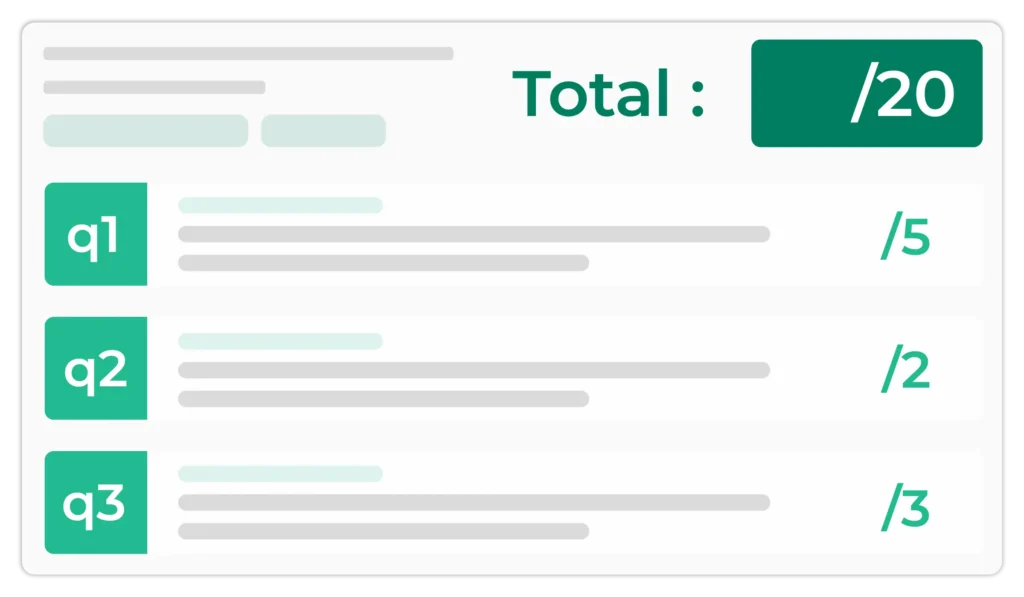
Your Frequently Asked Questions, Our Clear Answers
Are the comparison databases the same across the different Compilatio solutions?
Comparison databases are used for the similarity detection feature, also known as plagiarism detection.
This feature is available in the Compilatio Magister and Compilatio Studium solutions. However, the sources considered during the analysis may vary depending on the solution used.
To learn more about the comparison databases associated with each solution, see our article: “What types of sources does Compilatio compare my documents against?”
Are the documents uploaded to Compilatio confidential or shared?
A document uploaded to a Compilatio solution is accessible only to the user who uploaded it. In other words, a user never has access to a document that was not uploaded from their account.
Assignments uploaded and/or analyzed in Compilatio Studium are strictly confidential. They are not used as comparison material for teachers or other users.
Compilatio Magister users can choose whether or not to index documents uploaded and/or analyzed in their reference library for use as comparison sources. This setting can be changed at any time.
For more information, see the article: “Are documents uploaded to Compilatio confidential or shared?”
I’m a student—will my teacher be able to tell that my paper was analyzed using Compilatio Studium?
Only you have access to your student work.
Assignments uploaded and/or analyzed in the Compilatio Studium software are strictly confidential. If your teacher uses Compilatio Magister, they will not be able to view your Studium analysis.
How do I delete a document from Compilatio?
To delete a document, log in to your account and go to your document list. Click the three dots next to the document you want to delete, then select “Move to Trash.“
Next, go to the “Trash” section in the left-hand menu. Select the documents you want to permanently delete, then click “Empty Trash.”
See our article: “How do I delete a document from the Compilatio system?”
A solution for every need
Specific comparison criteria, demo requests, questions about our offerings, or technical support: our team is here to help.
- Technical Support
- Request a Demo
- Personalized Support
- LMS Integration, SSO, API