Altered Text Detector
Available only in the Compilatio Magister solution.
Some people modify their text to deceive detection software. Compilatio identifies these modifications, which are invisible to the naked eye, and flags them directly in the analysis report.
2 million
users
+60
countries
Request a demo
+2000
institutions
+60
countries
2M
users
+40
available languages
95%
of institutions resubscribe

What is text obfuscation?
Text obfuscation involves deliberately manipulating a document to make it undetectable by analysis software. The text remains readable to the naked eye, but its structure has been altered to deceive detection algorithms.
A detector that is not equipped with the necessary system will let these documents pass without flagging them.
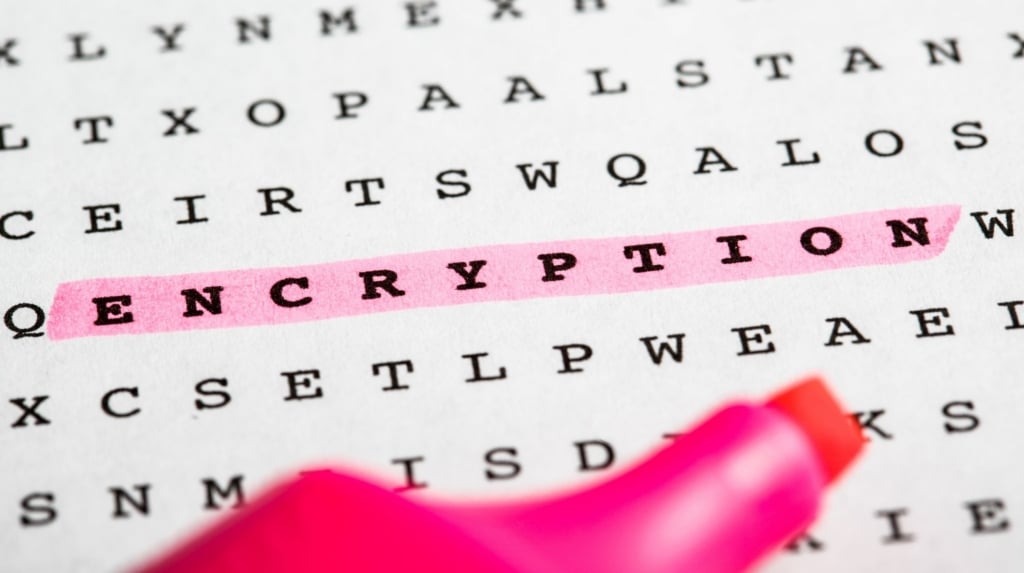
The most common technique is character substitution: a Latin letter is replaced by its visual equivalent in another alphabet; for example, the Latin letter “P” is replaced by the Greek letter “Ρ.”
How does Compilatio detect altered text?

Identifying the Language of the Document
Each submitted document is analyzed in its entirety to determine its primary language. This language reference serves as the basis for all detection; any element that deviates from it is subject to further review.
Character-by-Character Anomaly Detection
Some documents alter the text by inserting invisible characters or replacing letters with homographs (for example, a Greek “o” instead of a Latin “o”). Although these tricks are imperceptible to the naked eye, Compilatio immediately identifies them as encoding anomalies foreign to the document’s language.
Calculating a Quantitative Metric
All detected anomalies are expressed as a percentage of unrecognized language, which is automatically included in the analysis report. This is the metric you will find in the Compilatio summary.
Detection of Altered Texts, available on Compilatio Magister
Plagiarism and AI detection (and much more) for teachers
Analyze your students' work in just a few clicks.
Compilatio Magister detects several types of similarities across billions of sources and identifies content potentially generated by AI.
What you can see in the Compilatio Magister report
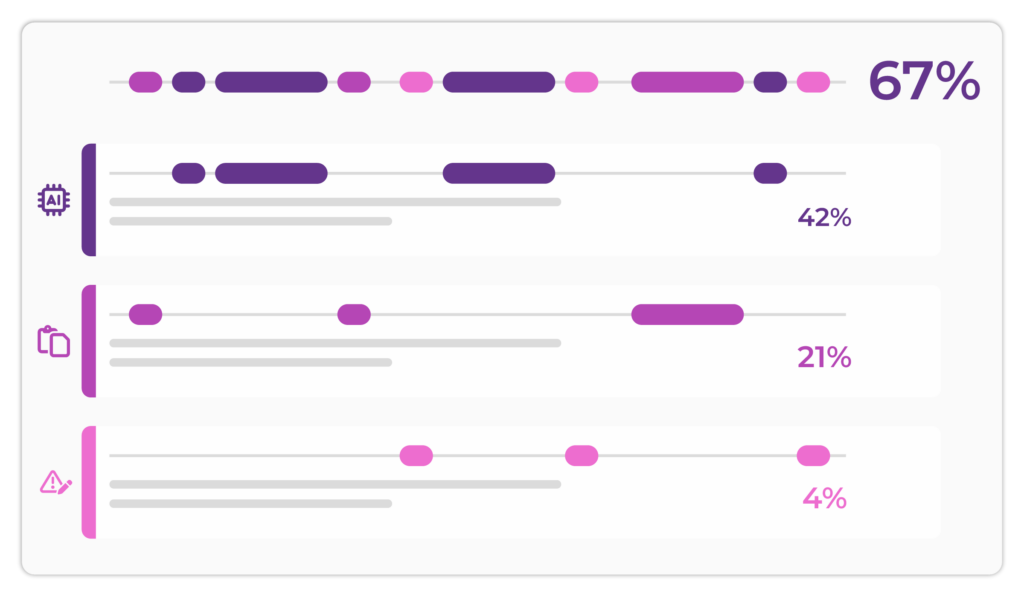
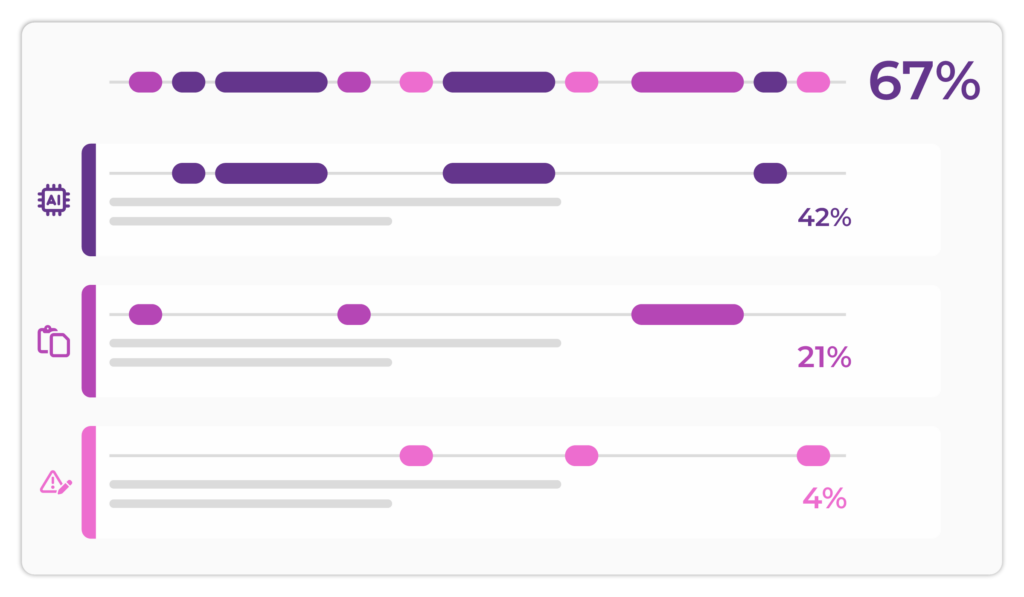
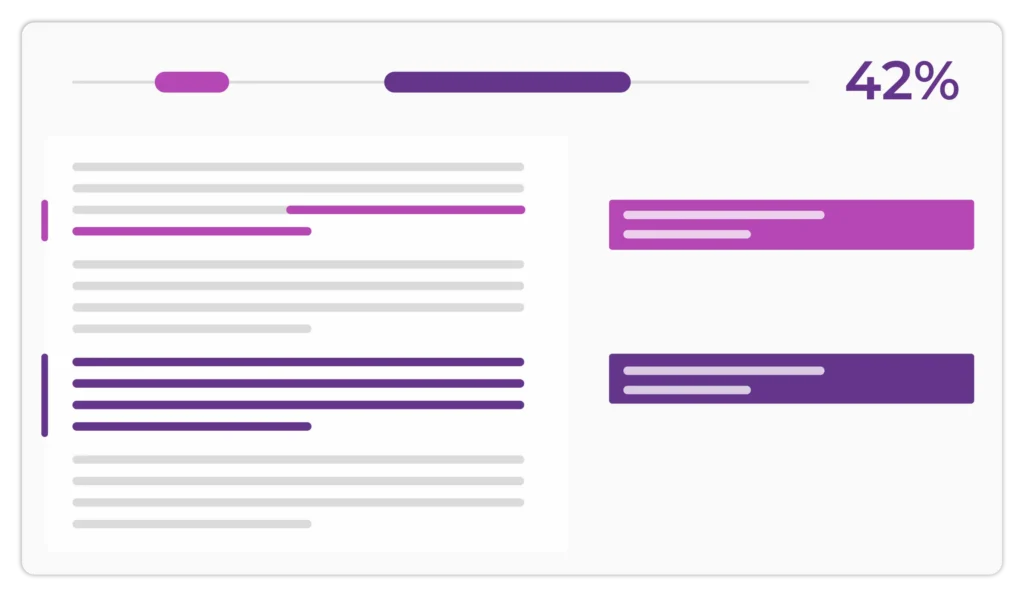
As soon as a document is submitted, Compilatio Magister automatically calculates the percentage of unrecognized language and provides this information at two levels of detail.
Document Summary
On the Summary tab, a dedicated indicator displays the percentage of unrecognized language detected in the document. This figure allows the teacher to assess at a glance whether the document warrants further review.
Annotated Full Text
In the Full Text tab, passages in unrecognized languages are highlighted directly within the document. This allows the instructor to pinpoint the relevant sections and conduct a targeted review before making a judgment.
They use Compilatio on a daily basis













20 years of expertise in academic integrity
Since 2004, Compilatio has supported more than 1,000 institutions and millions of students around the world. This real-world experience guides every step of our tools’ development.
Cutting-edge natural language processing technology
Compilatio specializes in natural language processing. Our software is reliable, secure, and compatible with major digital work environments.
Genuine and ongoing support
Compilatio does more than just provide a tool. Teachers, students, and educational institutions benefit from personalized support, dedicated training, and assistance available year-round.
Our LMS Integrations
Compilatio Magister integrates with the most widely used LMS platforms in higher education and secondary education.








Do you want to identify tampered text in your documents?
Whether you’re a teacher, a head of studies or a student, Compilatio has a solution tailored to your school or for your personal use.
Request a demo
Form
Your frequently asked questions, our clear answers
Does a high percentage of unrecognized languages necessarily indicate an attempt at fraud?
A high percentage is a red flag, not necessarily proof of fraud. Certain documents containing mathematical formulas, technical terms, or excerpts in a foreign language may generate similar results without any intention to conceal information. Compilatio displays the indicator and prompts the instructor to conduct a further review before making any judgment.
In which Compilatio plans is the detection of altered text available?
The detection of altered text is available exclusively in Compilatio Magister, the solution designed for instructors and higher education institutions. It is integrated into the standard analysis report and is automatically activated whenever a document is submitted.
Does the detection of altered text work on all types of documents?
The detection feature applies to all documents that can be analyzed by Compilatio Magister: essays, term papers, internship reports, theses, scientific articles, and any other documents submitted via the platform or LMS integrations.